Top 10 Metabolism-Boosting Foods for Fitness Enthusiasts
To boost your metabolism and enhance your fitness routine, focus on lean protein sources like chicken and fish, whole grains for energy, and green tea for antioxidants. Spice things up with hot peppers to increase calorie burn, while cruciferous veggies and berries provide essential nutrients and fiber. Don’t forget the healthy fats in avocados. Incorporate these foods into your meals, and you’ll discover more ways to fuel your fitness journey effectively.
Key Takeaways
- Lean protein sources like chicken and legumes aid muscle repair and boost metabolism by requiring more energy to digest.
- Green tea enhances calorie-burning and workout performance due to its caffeine and catechin content.
- Spicy foods, particularly those containing capsaicin, increase metabolic rates and may reduce appetite for weight maintenance.
- Whole grains provide fiber and complex carbohydrates, promoting satiety and efficient energy conversion for workouts.
- Incorporating cruciferous vegetables and berries offers essential nutrients, antioxidants, and fiber, aiding in detoxification and curbing cravings.
Lean Protein Sources
When you’re aiming to boost your metabolism, incorporating lean protein sources into your diet is essential.
Lean proteins, like chicken breast, turkey, fish, and legumes, not only help build and repair muscle but also require more energy to digest compared to fats and carbs. This means your body burns more calories processing them.
Grilling, baking, or steaming these proteins keeps them healthy and tasty. Aim for a balance of these protein sources in your meals to maximize metabolic benefits.
Green Tea
When you think about metabolism-boosting drinks, green tea should be on your radar.
Its powerful antioxidant properties help fight off free radicals, while caffeine can give your metabolism a little extra kick.
Let’s explore how both of these elements work together to support your fitness goals.
Antioxidant Properties Explained
Although many people enjoy sipping green tea for its soothing flavor, its impressive antioxidant properties make it a favorite among fitness enthusiasts. Rich in catechins, especially epigallocatechin gallate (EGCG), green tea helps combat free radicals and reduces oxidative stress. This means it can support your recovery and overall health.
| Antioxidant | Source | Benefit |
|---|---|---|
| EGCG | Green Tea | Boosts metabolism |
| Quercetin | Apples | Anti-inflammatory |
| Resveratrol | Red Wine | Heart health promotion |
| Curcumin | Turmeric | Anti-inflammatory effects |
| Anthocyanins | Berries | Cognitive health support |
Caffeine’s Effect on Metabolism
Green tea not only offers powerful antioxidant benefits but also contains caffeine, which can provide a significant boost to your metabolism.
This natural stimulant enhances your body’s calorie-burning capabilities, making it easier to maintain or lose weight. When you consume green tea, the caffeine works synergistically with other compounds, like catechins, to increase energy expenditure. This means you’ll burn more calories even at rest.
Plus, the combination can improve your workout performance, helping you push harder during exercise. To optimize your results, consider incorporating green tea into your daily routine and enjoy its invigorating taste alongside its metabolism-boosting benefits.
Whole Grains
Whole grains are essential for anyone looking to boost their metabolism and fuel their fitness journey. They’re packed with fiber, which helps keep you full and maintains steady blood sugar levels.
Foods like brown rice, quinoa, and whole wheat bread provide complex carbohydrates that your body can efficiently convert into energy. This slow digestion can enhance your metabolic rate, making workouts more effective.
Plus, whole grains contain important nutrients that support muscle recovery and overall health. Incorporating them into your diet isn’t just a smart choice for energy; it’s a step toward long-term weight management and improved performance.
Spicy Foods
If you’re looking to spice up your metabolism, adding some heat to your meals can do the trick.
Capsaicin, the compound that gives chili peppers their kick, has been shown to boost metabolic rates.
Capsaicin’s Metabolic Boost
While many foods can help rev up your metabolism, few are as exciting as those that pack a spicy punch, specifically thanks to compounds like capsaicin.
Found in chili peppers, capsaicin not only adds heat to your meals but also increases your metabolic rate. It can help your body burn more calories, even at rest.
Plus, spicy foods might reduce appetite, making it easier to maintain your weight. By incorporating capsaicin-rich foods into your diet, you can enjoy flavorful meals while giving your metabolism a natural boost.
Culinary Heat Sources
When it comes to adding a flavor kick to your meals, spicy foods aren’t just about heat; they also offer incredible health benefits. Ingredients like chili peppers contain capsaicin, which can boost your metabolism and help you burn more calories. Plus, they’re great for elevating your meals without extra calories. Here’s a quick look at some popular spicy options:
| Food | Heat Level | Metabolic Boost |
|---|---|---|
| Jalapeños | Medium | Increases calorie burn |
| Habaneros | High | Enhances fat oxidation |
| Thai Chili Peppers | Very High | Suppresses appetite |
Spice it up!
Leafy Greens
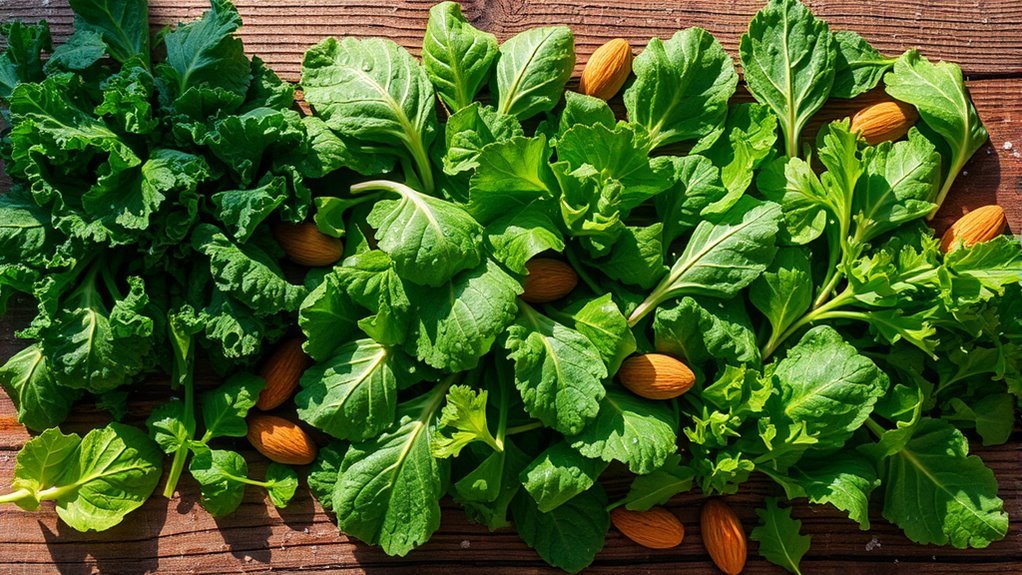
Although you might think of leafy greens as mere side dishes, they play an essential role in boosting metabolism and enhancing your fitness journey. Loaded with vitamins, minerals, and fiber, these nutrient-dense foods help keep you full while supporting your body’s metabolic processes.
Spinach, kale, and Swiss chard are great options; they’re low in calories yet rich in antioxidants, promoting overall health. Incorporating leafy greens into your meals can improve digestion and energy levels, making your workouts more effective.
Nuts and Seeds
Nuts and seeds are small but mighty when it comes to boosting your metabolism. They pack a powerful punch of nutrients and healthy fats that can fuel your workouts and keep you energized throughout the day.
Incorporating these crunchy snacks into your diet can make a significant difference in your overall fitness journey.
Nutrient Density Benefits
While you may be focused on your workout routine, it’s essential not to overlook the role of nutrient-dense foods like nuts and seeds in your diet.
They’re packed with benefits that can enhance your performance and recovery. Here’s why you should include them:
- High Protein: They provide a great source of plant-based protein for muscle repair.
- Fiber-Rich: Help you feel full longer, aiding in weight management.
- Vitamins & Minerals: Packed with essential nutrients for overall health.
- Antioxidants: Combat oxidative stress, keeping you energized and resilient during workouts.
Integrating them into your meals can lead to impressive results!
Healthy Fats for Energy
Including healthy fats in your diet not only supports energy levels but also plays an essential role in overall fitness. Nuts and seeds are excellent sources of healthy fats that provide sustained energy during workouts. They’re packed with omega-3s, protein, and fiber, which help fuel your body effectively.
| Food | Benefits |
|---|---|
| Almonds | High in protein, vitamin E |
| Chia Seeds | Rich in omega-3, fiber |
| Walnuts | Anti-inflammatory properties |
Incorporating these foods into your snacks or meals can enhance your energy and optimize your performance. Stay energized with healthy fats!
Greek Yogurt
When you’re looking to enhance your metabolism, Greek yogurt should definitely be on your radar.
Packed with protein and probiotics, it provides several benefits that can support your fitness goals.
Greek yogurt is a powerhouse of protein and probiotics, boosting your fitness journey with essential benefits.
Consider these four reasons to include it in your diet:
- High Protein Content: Keeps you full longer, reducing cravings.
- Probiotics: Support digestive health, improving nutrient absorption.
- Calcium-Rich: May help in fat breakdown and muscle function.
- Versatile: Easy to mix with fruits, nuts, or seeds for a tasty snack.
Cruciferous Vegetables
Cruciferous vegetables, such as broccoli, kale, and cauliflower, are excellent additions to your diet if you’re aiming to rev up your metabolism.
These nutrient-dense veggies are packed with vitamins, minerals, and fiber, which can help keep you feeling full longer. They also contain compounds like glucosinolates, known for their metabolism-boosting properties.
Incorporating these vegetables can support your body’s detoxification processes and promote overall health. Whether you steam, sauté, or toss them in a salad, they’re versatile and delicious.
Berries
After loading up on those nutrient-packed cruciferous vegetables, it’s time to sweeten your plate with berries. Not only do they taste great, but they also pack a metabolic punch!
Here are four reasons why you should include berries in your diet:
- High in Fiber: They help you feel full, curbing cravings.
- Antioxidant Rich: Protects your body from oxidative stress.
- Low in Calories: A delicious snack without the guilt.
- Natural Sugars: Satisfies your sweet tooth while keeping energy levels stable.
Avocado
Even though you might think of avocados as merely a creamy addition to your meals, they actually play a significant role in boosting metabolism.
Rich in healthy monounsaturated fats, avocados can help you feel fuller longer, reducing unhealthy snacking. Their fiber content aids digestion, promoting metabolic efficiency.
Plus, avocados provide essential nutrients, like potassium and magnesium, which are vital for energy production. Incorporating them into your diet can enhance nutrient absorption and fuel your workouts.
Whether in smoothies, salads, or on toast, avocados are versatile. So, don’t underestimate their power in your fitness journey!
Questions
How Many Meals Should I Have to Boost Metabolism Effectively?
To boost your metabolism effectively, aim for five to six smaller meals throughout the day. This keeps your energy levels stable and helps manage hunger, ultimately optimizing your body’s calorie-burning processes. Stay consistent!
Is Intermittent Fasting Beneficial for Metabolism Enhancement?
Yes, intermittent fasting can boost your metabolism. It may enhance fat burning and improve insulin sensitivity. Just make sure to stay hydrated and consume nutritious meals during your eating windows for the best results.
Can I Include Snacks Without Affecting My Metabolism?
Yes, you can include snacks without affecting your metabolism. Just choose healthy options, like fruits or nuts, and watch portion sizes. Balanced snacking can actually help keep your energy levels stable throughout the day.
What Role Does Hydration Play in Metabolism?
Hydration’s essential for metabolism; it helps your body perform at its best. When you’re well-hydrated, your cells function efficiently, supporting energy production and nutrient absorption. Without enough water, metabolic processes can slow down considerably, impacting your overall health.
Are There Specific Times to Consume These Foods for Maximum Benefit?
Eating metabolism-boosting foods like chia seeds right after your workout can enhance muscle recovery. For maximum benefit, consume them within 30 minutes post-exercise and pair them with proteins to optimize your body’s metabolic response.
Conclusion
Incorporating these metabolism-boosting foods into your diet can energize your workouts, fuel your recovery, and elevate your overall health. Embrace lean proteins to build strength, savor spicy foods to ignite your metabolic fire, and indulge in berries to satisfy your sweet tooth while nourishing your body. By making these choices, you’re not just eating; you’re investing in your wellness, empowering your fitness journey, and unfastening your potential. Start today, and watch the transformation unfold!