How to Build a Metabolism-Boosting Meal Plan for Fat Loss
To build a metabolism-boosting meal plan for fat loss, focus on balanced macronutrients. Include lean proteins, healthy fats, and high-fiber foods to enhance satiety and support muscle preservation. Stay hydrated by drinking plenty of water and incorporating water-rich foods. Timing your meals also matters; aim for smaller, frequent meals to regulate hunger. With some delicious recipes and helpful tips, it’s easier to stick to your plan and see results. Explore more strategies to maximize your success.
Key Takeaways
- Prioritize high-protein foods to promote muscle maintenance, satiety, and a boosted metabolic rate throughout your meal plan.
- Include healthy fats from sources like avocados and nuts to enhance satiety and reduce cravings for a balanced diet.
- Opt for smaller, more frequent meals to help stabilize blood sugar and prevent binge-eating episodes, supporting consistent energy levels.
- Stay hydrated by drinking at least half your body weight in ounces of water daily and incorporating water-rich fruits and vegetables into meals.
- Regularly reassess your meal plan based on progress and adjust macronutrient ratios as needed to optimize fat loss results.
Understanding Metabolism and Weight Loss
Have you ever wondered how your body transforms food into energy? This process, known as metabolism, plays a vital role in weight loss.
It involves converting the calories you consume into fuel for daily activities. Your metabolic rate varies based on factors like age, gender, and muscle mass.
When you eat, your body burns calories to digest, absorb, and store nutrients. If you’re looking to lose fat, creating a calorie deficit—burning more calories than you consume—is essential.
Understanding how metabolism works can help you make informed choices about your meals and improve your chances of reaching your weight loss goals.
The Importance of Macronutrients
When you’re planning for fat loss, understanding macronutrients is key.
Getting the right balance of carbs, fats, and especially protein can make a big difference in your results.
Let’s explore how these ratios impact your meal plan and why protein intake matters so much.
Macronutrient Ratios Explained
Understanding macronutrient ratios is essential for effective fat loss; after all, balanced nutrition can make or break your progress. By focusing on the right proportions of proteins, fats, and carbohydrates, you can fuel your body and reach your goals.
Here’s why you need to pay attention to these ratios:
- Release more energy, making workouts easier and more effective.
- Combat cravings and keep hunger at bay, so you stick to your plan.
- Enhance recovery, allowing your body to bounce back faster and stronger.
Getting your macronutrient ratios right can be the game-changer you’ve been looking for on your fat loss journey!
Importance of Protein Intake
With protein playing a critical role in your fat loss journey, it’s important to prioritize adequate intake to support your goals. Not only does protein help in muscle maintenance, but it also promotes satiety, reducing overall calorie consumption. Aim for a balanced diet comprising various protein sources to maximize benefits.
| Source | Protein Content (g) | Best Time to Consume |
|---|---|---|
| Chicken | 26 | Post-workout |
| lentils | 18 | Lunch |
| Greek Yogurt | 10 | Breakfast |
| Eggs | 6 | Any time |
| Quinoa | 8 | Dinner |
Incorporate these sources for ideal results!
Incorporating Protein for Muscle Preservation
To keep your muscles intact while losing fat, timing your protein intake is essential.
You’ll want to choose high-quality sources to guarantee you’re getting the nutrients your body needs.
Let’s explore how these factors can make a big difference in your meal plan.
Importance of Protein Timing
Since incorporating protein at strategic times can greatly contribute to muscle preservation, it’s essential to pay attention to your protein timing throughout the day.
Think of each meal as an opportunity to fuel your muscles effectively:
- You’ll feel stronger and more energized during your workouts.
- Your recovery will be faster, so you can get back to your routine sooner.
- You’ll stave off cravings, keeping your fat loss goals within reach.
Choosing High-Quality Sources
Choosing high-quality protein sources is essential for preserving muscle while you’re on a fat loss journey, especially when you consider that your body’s needs change as you reduce calorie intake.
Aim for lean meats, like chicken and turkey, fish rich in omega-3s, and plant-based options like lentils and quinoa. These foods provide essential amino acids that support muscle repair and growth.
Don’t forget dairy products, especially Greek yogurt, which offers a protein punch. Incorporating a variety of these sources guarantees you’re maximizing nutrient intake while keeping your meals satisfying and enjoyable.
Prioritize quality to maintain your strength and overall health.
Healthy Fats: The Key to Satiety
While you might focus on cutting calories for fat loss, incorporating healthy fats into your meals can actually enhance satiety and help you stick to your plan. When you feel full and satisfied, you’re less likely to crave unhealthy snacks.
Embrace healthy fats like:
- Avocados that add creaminess and richness.
- Nuts that provide crunch and keep your energy steady.
- Olive oil that brings flavor and heart-healthy benefits.
These nutritious fats not only elevate your meals but also keep you content, making your fat loss journey more enjoyable. So, don’t shy away from fats; they’re your allies in achieving lasting results!
The Role of Fiber in Metabolism
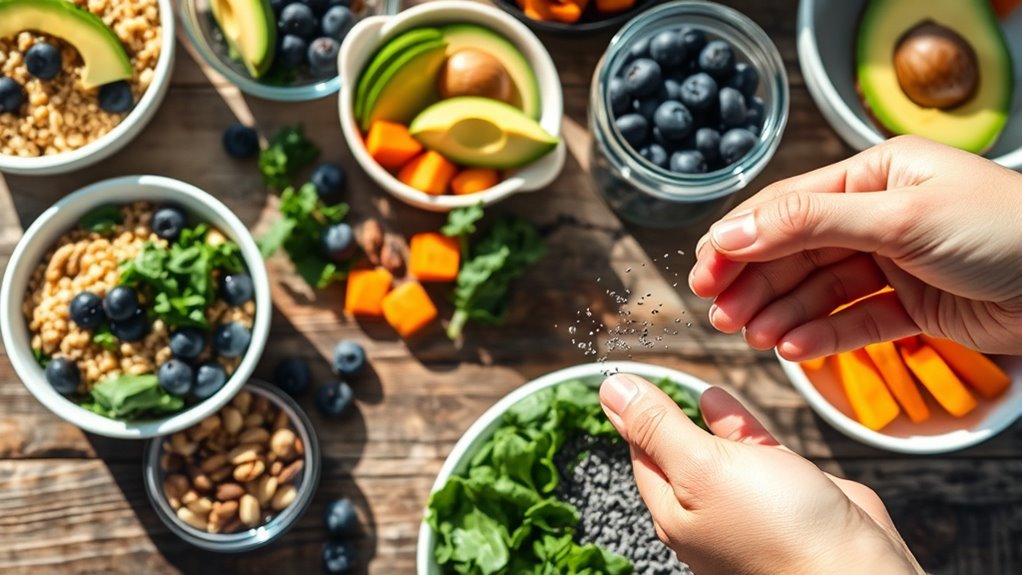
Fiber plays an essential role in metabolism, acting as a natural regulator for your digestive system. It helps maintain steady energy levels while preventing spikes in blood sugar. By keeping you full for longer, fiber reduces overeating, making it easier to stick to your meal plan.
| Fiber Type | Sources | Benefits |
|---|---|---|
| Soluble Fiber | Oats, beans, fruits | Lowers cholesterol |
| Insoluble Fiber | Whole grains, nuts | Improves digestion |
| Functional Fiber | Supplements | Enhances gut health |
Incorporating fiber-rich foods can enhance your fat loss journey effectively!
Meal Timing and Frequency
When it comes to fat loss, the timing and frequency of your meals can play a key role in your success.
By optimizing how often you eat and when you fuel your body, you can support your metabolism and enhance workout performance.
Let’s explore how to effectively time your meals and the importance of pre- and post-workout nutrition.
Optimal Meal Frequency
Finding the right meal frequency can make a significant difference in your fat loss journey, as it influences your metabolism and hunger levels. Experiment with different frequencies to find what works best for you.
Aim for a routine that keeps you satisfied and energized, like:
- Eating smaller, more frequent meals to stave off hunger and prevent binge eating.
- Having larger, less frequent meals if you prefer longer breaks between food.
- Listening to your body’s cues and adjusting accordingly, promoting a sustainable lifestyle.
Choosing the ideal meal frequency can transform your experience and help you reach your fat loss goals effectively.
Timing for Maximum Efficiency
Meal timing can play a significant role in your fat loss results, complementing the meal frequency you’ve chosen. Eating at regular intervals keeps your metabolism stimulated and helps stabilize blood sugar levels, reducing cravings.
Aim for meals and snacks every 3-4 hours to maintain energy and prevent overeating later. It’s also beneficial to align your eating times with your daily routine—think about when you’re most active.
Some find success with earlier dinners, allowing for longer overnight fasting. Ultimately, the best timing is what fits seamlessly into your lifestyle, making it easier to stick with your meal plan long-term.
Pre- and Post-Workout Meals
To optimize your workouts and support fat loss, it’s crucial to pay attention to your pre- and post-workout nutrition. Fueling your body the right way can make a significant difference in your performance and recovery.
- Feeling energized during your workout is key, so choose carbs and protein before you hit the gym.
- Post-workout, your body craves nutrients to recover, helping you avoid soreness and fatigue.
- Enjoying a well-timed meal can boost your metabolism, making fat loss feel more attainable.
Hydration and Its Impact on Metabolism
While you may focus on your diet and exercise when aiming for fat loss, hydration plays an essential role in supporting your metabolism.
Drinking enough water helps your body efficiently break down food, promoting better nutrient absorption and energy expenditure.
Dehydration can slow your metabolic rate, making it harder to lose weight.
Aim for at least half your body weight in ounces of water daily, adjusting based on activity levels and environmental factors.
Incorporating water-rich foods, like fruits and veggies, can also boost hydration.
Sample Meal Plan for Fat Loss
Creating a sample meal plan for fat loss can streamline your efforts and make it easier to stay on track with your goals.
Here’s a basic outline that can inspire you:
- Breakfast: Oatmeal topped with berries and a sprinkle of cinnamon.
- Lunch: Grilled chicken salad with mixed greens and a vinaigrette dressing.
- Snack: Greek yogurt with honey and walnuts.
Delicious Metabolism-Boosting Recipes
If you’re looking to rev up your metabolism while enjoying delicious meals, incorporating nutrient-dense ingredients is key.
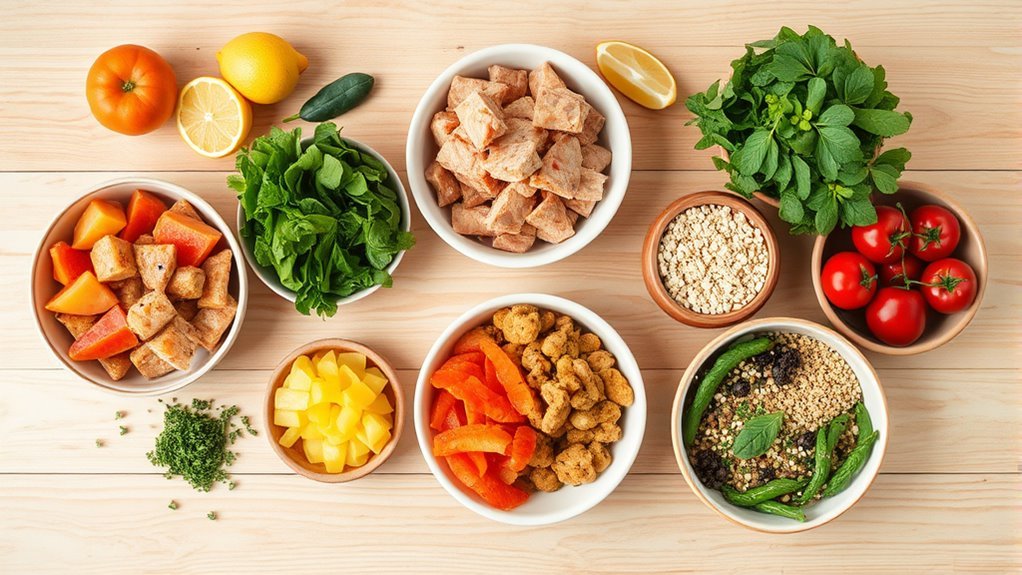
Try a breakfast of scrambled eggs with spinach and avocado for a filling start. For lunch, whip up a quinoa salad with chickpeas, cherry tomatoes, and a zesty lemon dressing.
Dinner could feature grilled salmon seasoned with herbs, served alongside roasted Brussels sprouts.
Don’t forget healthy snacks like Greek yogurt topped with berries or a handful of almonds.
These meals not only satisfy your taste buds but also fuel your body for peak metabolism and fat loss. Enjoy every bite on your journey!
Tips for Sticking to Your Meal Plan
How can you guarantee you stick to your meal plan and achieve your fat loss goals? It’s all about commitment and a mindset shift. Here are some tips to keep you on track:
- Visualize success: Picture how you’ll feel and look after reaching your goals.
- Create a support network: Share your journey with friends or join groups that motivate you.
- Prep meals in advance: Having healthy meals ready helps you resist temptation.
Stay focused, remember why you started, and celebrate your progress.
Every small victory counts on your road to success!
Questions
Can I Eat Carbs While Trying to Boost Metabolism?
Yes, you can eat carbs while trying to boost your metabolism. Focus on complex carbs, like whole grains and vegetables, which provide energy and nutrients. Balance them with protein and healthy fats for maximum results.
How Does Sleep Affect My Metabolism and Fat Loss?
Imagine your body as a finely tuned engine. Without enough sleep, it sputters and slows, hindering metabolism and fat loss. Prioritize restful nights, and watch your body transform into a powerhouse of fat-burning efficiency.
What Snacks Can I Include in My Meal Plan?
You can include Greek yogurt, mixed nuts, apple slices with nut butter, or veggie sticks with hummus as snacks. These options are nutritious, satisfying, and can help keep your metabolism active throughout the day.
Are There Exercises That Specifically Boost Metabolism?
Oh sure, just by thinking about exercise, you’re practically burning calories! But really, high-intensity interval training, strength training, and cardio are your best bets for cranking up that metabolism and feeling fabulous while doing it.
How Do Stress Levels Impact Metabolism and Weight Loss?
Stress levels can slow your metabolism and lead to weight gain. When you’re stressed, cortisol spikes, which encourages fat storage and cravings for unhealthy foods. Managing stress through relaxation techniques can help support your weight loss efforts.
Conclusion
You might think a metabolism-boosting meal plan sounds too restrictive or boring, but that’s far from the truth! By focusing on a balance of protein, healthy fats, and fiber, you’ll enjoy satisfying meals that fuel your body and keep cravings at bay. Plus, with diverse recipes and easy tips for sticking to the plan, you’ll find it’s more about nourishing yourself than depriving yourself. So give it a try—you’re likely to love the results!