Pre-Workout & Post-Workout Nutrition to Speed Up Metabolism
To speed up your metabolism, focus on proper pre-workout and post-workout nutrition. Fuel your body with carbs and protein to enhance performance and recovery. Timing is essential; eat snacks 30 minutes before workouts and meals 1-2 hours prior. After exercising, consume protein and carbs within 30-60 minutes to replenish glycogen and repair muscles. Don’t forget hydration, as it plays an important role too. There’s more to learn about fine-tuning your nutrition for best results.
Key Takeaways
- Consuming a balanced meal with carbohydrates and protein 1-2 hours before exercise prepares the body and enhances metabolism during workouts.
- Quick snacks like bananas or Greek yogurt 30 minutes prior to workouts provide immediate energy without causing sluggishness.
- Post-workout meals rich in protein and carbohydrates within 30-60 minutes replenish glycogen and support muscle recovery, boosting metabolic processes.
- Staying hydrated before and after workouts maximizes nutrient utilization, improving overall energy levels and metabolic function.
- Prioritizing quality sleep and incorporating recovery days enhance metabolic health and improve workout efficiency over time.
The Importance of Pre-Workout Nutrition
When you fuel your body properly before a workout, you can greatly enhance your performance and endurance.
Pre-workout nutrition sets the stage for success, providing the energy and stamina you need. A well-timed meal or snack can keep your blood sugar stable, preventing fatigue and enhancing focus.
It’s essential to choose the right foods to support your activities, helping you push through tough sessions. You’ll find it easier to achieve your fitness goals when your body is adequately prepared.
Key Nutrients for Optimal Energy Before Exercise
To fuel your workout effectively, you need to focus on key nutrients that provide energy and support.
Carbohydrates serve as your main source of quick energy, while protein helps with muscle support as you exercise.
Finding the right balance between these nutrients can make a significant difference in your performance.
Carbohydrates for Quick Energy
Carbohydrates serve as the body’s primary fuel source, providing the quick energy you need for peak performance before exercise. When you consume carbs, they’re broken down into glucose, which is readily available for your muscles.
For ideal energy, aim for a mix of complex carbs, like whole grains, and simple carbs, like fruits, about 30-60 minutes before your workout. This combination guarantees both immediate energy and sustained performance.
Don’t forget to hydrate! Proper hydration enhances carbohydrate utilization, helping you push harder and longer.
Protein for Muscle Support
For ideal energy before exercise, protein plays a key role in muscle support and recovery. It helps repair and build muscle fibers, ensuring you’re strong during workouts. Incorporating protein-rich foods like lean meats, eggs, or dairy can keep your energy levels stable.
Aim for a pre-workout meal that includes protein along with carbohydrates, as this combo fuels your muscles effectively. A protein shake or bar is a quick, convenient option if you’re short on time.
Timing Your Pre-Workout Meal
When should you actually eat before hitting the gym? Ideally, you want to fuel up 30 minutes to two hours prior, depending on your meal size. Eating too close to your workout can leave you feeling sluggish, while eating too early might leave you hungry. Here’s a quick guide to help you decide:
| Time Before Workout | Meal Type | Example |
|---|---|---|
| 30 minutes | Small Snack | Greek yogurt & honey |
| 1 hour | Moderate Meal | Oatmeal with fruit |
| 2 hours | Full Meal | Chicken & quinoa |
Timing’s key to maximize your performance!
Snacks to Fuel Your Workout
What snacks can truly fuel your workout and keep your energy levels up?
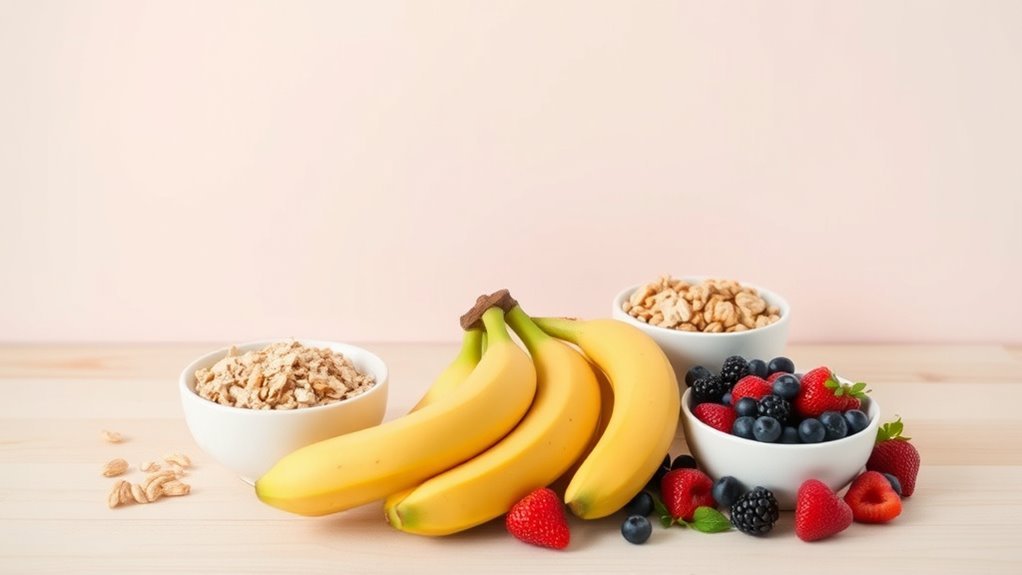
Think quick, nutrient-dense options that won’t weigh you down. Banana with nut butter is a classic combo, providing carbs and healthy fats.
Trail mix, packed with nuts and dried fruit, delivers a perfect balance of protein and energy.
Greek yogurt with honey makes for a tasty, protein-rich treat. Alternatively, energy bars with whole ingredients can be convenient on-the-go solutions.
Hydration: A Critical Component

Hydration plays an essential role in your workout performance and recovery. Without proper hydration, you can experience fatigue and decreased focus, impacting your results.
Staying hydrated helps maintain energy levels, allows for efficient nutrient transportation, and supports muscle function. Here’s what you should keep in mind:
- Drink water before, during, and after your workouts.
- Incorporate electrolyte-rich beverages for longer sessions.
- Adjust your fluid intake based on temperature and humidity.
- Listen to your body; thirst is a sign you need more fluids.
The Role of Post-Workout Nutrition
Post-workout nutrition is essential for recovery and muscle growth, especially after an intense session.
It’s during this time your body needs replenishment to repair damaged muscles and restore glycogen levels. Consuming proper nutrients post-workout can also help reduce soreness and fatigue, allowing you to bounce back quicker for your next training.
The sooner you refuel—ideally within 30 to 60 minutes—the more effective it’ll be.
Essential Nutrients for Recovery
When it comes to recovery, you’re going to want to focus on protein and carbohydrates.
Protein helps repair and build muscle, while carbohydrates replenish your energy stores.
Getting the right balance of these nutrients can make a big difference in how quickly you bounce back after a workout.
Importance of Protein
As you push your body to its limits during workouts, it’s essential to remember the role of protein in recovery. This macronutrient helps repair and build muscles, ensuring you bounce back stronger.
Incorporating enough protein into your post-workout nutrition can lead to better results. Consider these key benefits:
- Supports muscle growth and repair
- Reduces muscle soreness after intense workouts
- Aids in maintaining a healthy metabolism
- Helps balance hormones related to appetite and stress
Role of Carbohydrates
While protein plays an essential role in muscle repair, carbohydrates are equally important for recovery.
They replenish glycogen stores depleted during your workout, providing the energy you need for peak performance in future sessions. Consuming carbs post-workout can also help reduce muscle soreness and fatigue.
Ideally, aim for a blend of simple and complex carbohydrates to support immediate energy needs and long-term recovery. Think fruits, whole grains, or even a recovery shake.
Don’t overlook this important nutrient; it aids in balancing your body’s energy levels, ensuring you’re ready for your next workout and helping speed up your metabolism overall.
Timing Your Post-Workout Meal
To maximize recovery and muscle growth, timing your post-workout meal is essential. Aim to eat within 30 to 60 minutes after exercising. This window helps replenish nutrients and kickstarts the recovery process.
Here’s what to evaluate:
- Your body craves nutrients after intense workouts.
- Hormones like insulin help transport nutrients into your cells.
- Eating promptly can reduce muscle soreness and fatigue.
- It sets the stage for muscle repair and growth.
Getting your meal right after your workout can mean the difference between ideal recovery and missed opportunities for progress.
Don’t let that time slip away!
Incorporating Protein and Carbohydrates
Once you’ve finished your workout and are ready to refuel, incorporating a balanced mix of protein and carbohydrates is essential for ideal recovery. Protein helps repair and build muscle, while carbohydrates replenish your energy stores. Aim for a 3:1 ratio of carbs to protein to maximize your recovery.
| Protein Sources | Carbohydrate Sources | Benefits |
|---|---|---|
| Chicken breast | Brown rice | Muscle repair |
| Greek yogurt | Sweet potatoes | Quick energy replenishment |
| Eggs | Quinoa | Balanced nutrient profile |
Combining these will help speed up your metabolism and enhance recovery!
Tips for Maintaining Metabolic Boost Post-Workout
After you’ve finished your workout, maintaining that metabolic boost is essential for maximizing the benefits of your effort. Here are some tips to help you keep those calories burning:
- Rehydrate with water or an electrolyte drink to support recovery.
- Consume a balanced meal with protein and carbs within 30-60 minutes.
- Incorporate light activity, like walking, to sustain elevated heart rate.
- Prioritize sleep and recovery days for overall metabolism support.
Questions
Can I Use Supplements Instead of Whole Foods for Pre-Workout Nutrition?
Yes, you can use supplements instead of whole foods for pre-workout nutrition, but they’re not a complete substitute. Whole foods offer essential nutrients that supplements might lack, so balancing both is often a better approach.
How Does Sleep Impact My Pre-And Post-Workout Nutrition?
Sleep’s impact on your nutrition’s like a thunderstorm shaping a landscape. If you don’t get enough rest, your body can’t properly absorb nutrients, so it’s vital for maximizing your pre-and post-workout food effectiveness.
Are There Specific Foods to Avoid Before Working Out?
You should avoid heavy, fatty foods and high-sugar snacks before working out. They can cause sluggishness and stomach discomfort. Instead, stick to easily digestible carbs and moderate protein for ideal energy during your workout.
How Do Different Workouts Affect My Nutritional Needs?
Different workouts require varying nutritional needs; for strength training, focus on protein for muscle repair, while endurance workouts demand more carbohydrates for energy. Adjust your intake based on intensity and duration for peak performance.
Can I Eat a Large Meal Before a Workout?
You might think a large meal’ll weigh you down, but you can eat one if it’s well-timed—about two to three hours before. Just make sure it’s balanced, so you’ve got energy for your workout!
Conclusion
In conclusion, fueling your body with the right pre- and post-workout nutrition can truly ramp up your metabolism. Think of your muscles as engines—without the right fuel, they just won’t run efficiently. By timing your meals and incorporating key nutrients, you not only enhance your performance but also support recovery. So, don’t underestimate the power of that snack before hitting the gym or your recovery meal after—your body will thank you with better results!